


The global semiconductor industry is entering a pivotal phase of transformation as the physical limits of traditional technologies become increasingly apparent. Amid the rapid rise of artificial intelligence and exponentially growing computing demand, chipmakers are being forced to explore new directions to sustain performance growth. From 2nm and 1.4nm process nodes to chiplet architectures, advanced packaging, and 3D stacking technologies, the future of the semiconductor industry is being reshaped by profound innovations in both design and manufacturing.
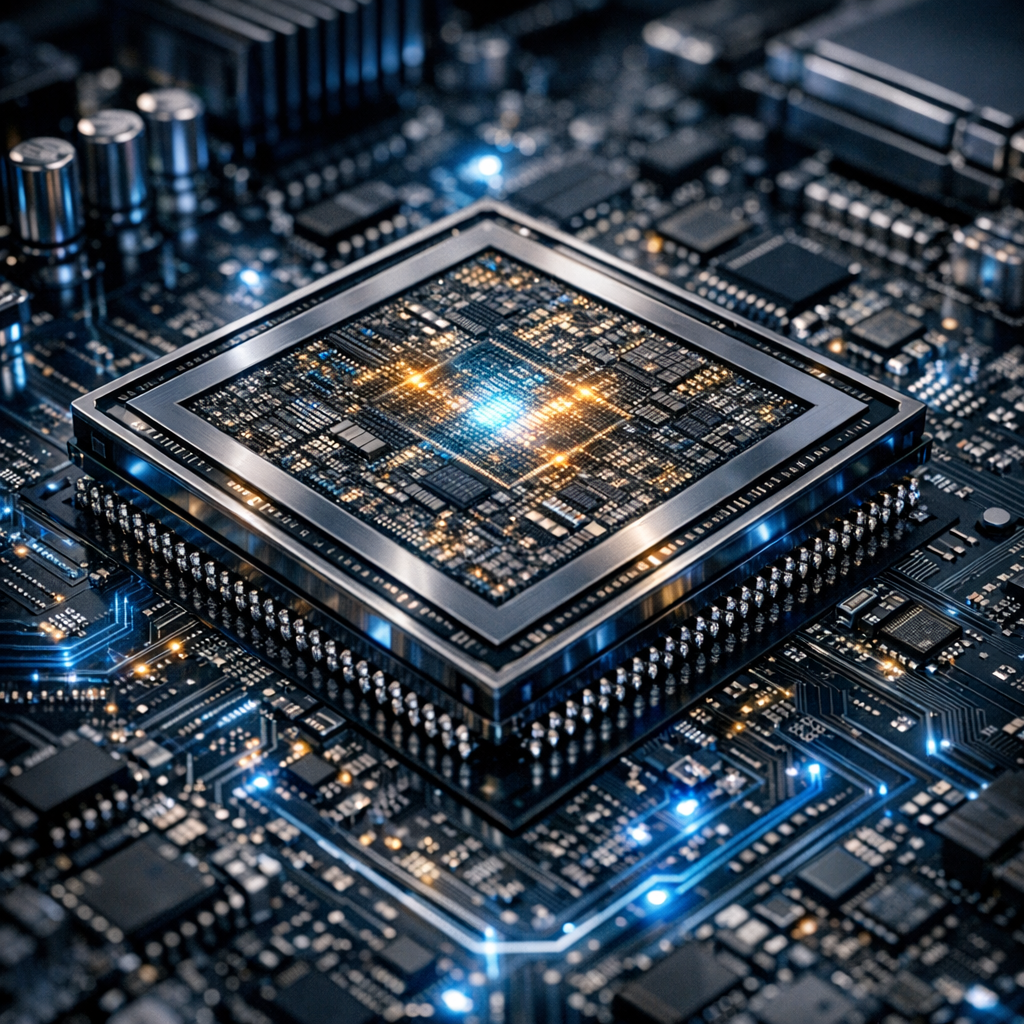
One of the most visible trends is the race to shrink manufacturing processes. Industry giants such as TSMC, Samsung, and Intel are competing intensely to commercialize 2nm chips and move toward 1.4nm. Reducing transistor size increases integration density, improves performance, and lowers power consumption per computation. However, as the industry approaches the physical limits of silicon, production costs and technological complexity rise significantly. Building a cutting-edge semiconductor fabrication plant can cost tens of billions of dollars, narrowing the field to only a handful of companies with sufficient financial and technological capabilities.
In this context, the chiplet architecture is emerging as a breakthrough solution. Instead of producing a single large monolithic chip, designers divide it into smaller “chiplets”—individual functional blocks—then integrate them into a unified system. This approach not only improves manufacturing efficiency but also enhances design flexibility, allowing different technologies to be combined on the same platform. Companies such as AMD and Intel are leading the adoption of this architecture, particularly in high-performance chips for data centers and AI.
Alongside chiplets, advanced packaging technologies are evolving rapidly. While packaging was once considered the final protective step, it has now become a critical factor determining overall system performance. Technologies such as 2.5D and 3D packaging enable high-bandwidth, low-latency connections between multiple chips, opening the door to building more powerful computing systems without relying solely on transistor scaling.
At the forefront of this evolution is 3D stacking technology. Instead of arranging components on a flat plane, chip layers are stacked vertically, significantly reducing data transmission distances and boosting performance. This technology is particularly crucial for AI, where memory bandwidth and data access speed are key. Advances in 3D stacking are enabling the development of “superchips” with performance far beyond traditional architectures.
However, performance is no longer the only priority. In the era of AI data centers, energy efficiency has become a top concern. A modern data center can consume as much electricity as a small city, making operational costs and environmental impact major challenges. As a result, chipmakers are focusing on improving performance per watt.
Companies like NVIDIA are not only competing on raw computing power but also on energy efficiency, with next-generation GPUs specifically designed for AI workloads in data centers. At the same time, specialized chips such as ASICs and AI accelerators are being developed to minimize power consumption while maintaining high performance.
These trends are converging to create an entirely new generation of computing infrastructure. Chips are no longer standalone products but integral components of a broader ecosystem that includes data centers, cloud computing, and artificial intelligence. The evolution of the semiconductor industry therefore depends not only on manufacturing technology but also on system integration and optimization across the entire value chain.
Amid intensifying global technological competition, semiconductors are also becoming a strategic asset for nations. Mastering technologies such as 2nm processes, chiplet architectures, and 3D stacking is not only an economic advantage but also closely tied to technological security and digital sovereignty.
For emerging economies like Vietnam, this is a critical moment to engage more deeply in the semiconductor value chain. Rather than focusing solely on manufacturing, investing in chip design, advanced packaging, and workforce development could unlock significant opportunities. As the industry shifts from “scaling down” to “smart integration,” countries with the right strategies can secure a meaningful position in the global ecosystem.
Ultimately, the future of the semiconductor industry will not be determined solely by who creates the smallest transistor, but by who builds the most optimized architecture for the AI era. From 2nm to 1.4nm, from chiplets to 3D stacking, and from performance to energy efficiency, these innovations are driving a new revolution in semiconductors—one that will shape the technological foundation of the 21st century.