


Today, moving business data and applications to the cloud is no longer a mere technology trend, but has become a vital strategic choice for modern businesses. From large corporations to startups, cloud storage is considered the key to achieving flexible scalability, optimizing operations and meeting the increasing security requirements in the digital world.
FROM HARD INFRASTRUCTURE TO SCALE COMPUTING

Traditionally, enterprise IT systems are built on on-premises, requiring large costs for servers, operations, electricity, and technical personnel. However, this hard infrastructure is often inflexible, difficult to scale to meet sudden growth needs, and poses many risks to data security and availability.
In contrast, the Infrastructure as a Service (IaaS), Platform as a Service (PaaS), and Software as a Service (SaaS) models on the cloud platform help businesses not need to invest upfront but can use computing resources according to actual needs. The cloud brings the ability to deploy quickly, automate management, continuous security updates, and especially the ability to process big data in real time - the core factor for AI applications, customer behavior analysis, and market trend prediction.
DATA LOCATION PROBLEM: FROM TECHNOLOGY TO SOVEREIGNTY
However, with the growth of the cloud comes new challenges. Businesses are not only concerned about speed, performance or cost, but also about data storage location, especially when sensitive data is located outside the national territory.

In Vietnam, the Law on Cyber Security and related legal documents have clearly required domestic user data storage on servers located in Vietnam. This creates an urgent need for domestic cloud systems – cloud infrastructure deployed right in Vietnam, compliant with the law, highly secure and scalable.
Technically, this requires domestic data centers to be designed with multi-layered data protection, support distributed storage technologies, real-time backup, disaster recovery capabilities, and at least meet international standards such as Uptime Tier III or higher, ISO 27001, PCI DSS...
In addition, transmission connectivity plays an essential role. A robust domestic cloud platform cannot exist without high-speed fiber connectivity, supporting DWDM, multi-path, low latency, and ensuring seamless connectivity across geographies and data clusters.
DCH AND CLOUD INFRASTRUCTURE STRATEGY IN VIETNAM
Understanding these needs, DCH - one of the pioneering private enterprises in deploying telecommunications and data infrastructure in Vietnam - is investing heavily in the project AI Data Center integrated with cloud platform in Ba Ria - Vung Tau, expected to be operational by the end of 2025.
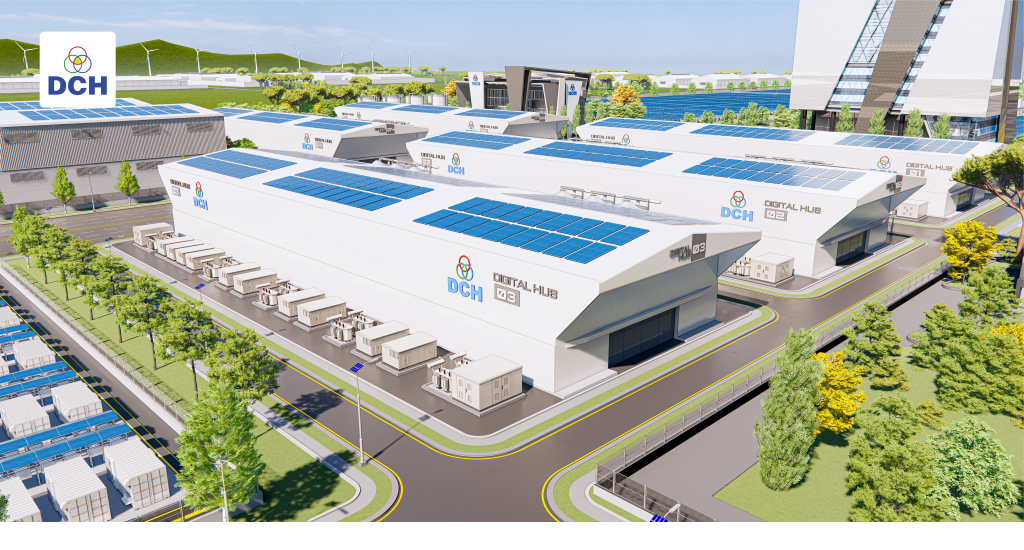
The project is not simply a traditional data center, but is designed from the ground up to serve high-end needs such as:
Domestic cloud infrastructure serving Vietnamese businesses, helping to comply with legal regulations and enhance data sovereignty;
In-depth AI data processing capabilities, supporting businesses in deploying machine learning models, big data analysis and operational automation;
High-speed fiber optic transmission network connecting data centers and major cities such as Ho Chi Minh City, Hanoi, and Da Nang;
Flexible data security and location mechanisms, allowing businesses to choose storage locations according to internal needs or industry regulations.
With this strategy, DCH not only provides infrastructure services but is gradually building a trusted digital ecosystem - where Vietnamese businesses can develop, operate and protect digital assets right on Vietnamese territory.
Moving to cloud storage is no longer a “technology choice” – it is an inevitable requirement if businesses want to adapt to the modern digital business environment, scale flexibly, exploit data value and ensure operational safety.
In that context, domestic cloud-integrated data centers like DCH’s project are playing a fundamental role in the digitalization strategy of enterprises. This is also a potential investment opportunity in a field that is becoming the “circulatory system” of Vietnam’s digital economy.