


The development journey of Vietnam’s semiconductor industry is a story of long-term strategic transformation—from accepting a position at the “downstream” end of the global value chain to aspiring to gradually master core technologies at its foundation.
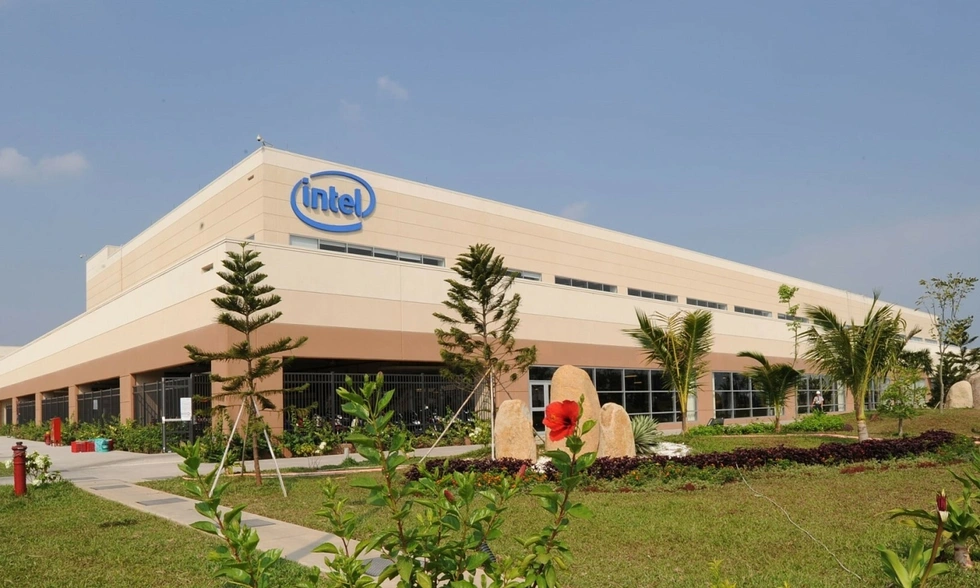
Vietnam officially appeared on the global semiconductor map in 2006, when Intel received its investment license, followed by the operation of its USD 1 billion manufacturing facility at the Saigon Hi-Tech Park in 2010. This marked a major breakthrough, positioning Vietnam as an attractive destination for high-tech foreign direct investment. However, Vietnam’s role at that time was largely concentrated in ATP (Assembly, Testing, and Packaging)—the lowest value-added segment of the semiconductor value chain, characterized by labor intensity and limited transfer of core technologies.
Alongside foreign investment, Vietnam also made notable indigenous efforts. A prominent example is the Integrated Circuit Design Research and Education Center (ICDREC) under Vietnam National University Ho Chi Minh City, which embodied the aspiration to design “Make in Vietnam” chips. Although the center successfully developed the country’s first chips, the lack of a comprehensive ecosystem and a sufficiently large market prevented these early sparks from scaling up. For a long period, Vietnam remained in a “hibernation” phase, positioned in the low-value segment of the global value chain and content with a role as a cost-efficient processing hub.
The global landscape changed dramatically following the COVID-19 pandemic and rising geopolitical tensions, which disrupted global supply chains and exposed the risks of overreliance on a few semiconductor manufacturing centers. Semiconductors have since become the “new oil,” a matter of national security for major powers. Recognizing this historic opportunity, particularly during the 2023–2025 period, Vietnam began to undertake comprehensive and strategic preparations.
The Communist Party and the Government demonstrated unprecedented political determination through Resolution No. 57 of the Politburo on breakthroughs in science and technology development, innovation, and national digital transformation. Shortly thereafter, the Government identified semiconductors as one of the 11 strategic technology groups. The message that “Vietnam chooses a difficult but sustainable path to mastering core technologies” was clearly articulated by Prime Minister Pham Minh Chinh, signaling a strategic shift not only in policy documents but also in concrete actions, including high-level technology diplomacy and targeted efforts to attract investment into higher-value segments of the semiconductor chain.
The 2023–2025 period is regarded as a phase of internal capacity building, focusing on the development of legal frameworks, workforce training, and infrastructure readiness to form a national semiconductor ecosystem. A key milestone was the establishment of the National Center for Semiconductor Prototyping Support. Rather than a purely theoretical research institute, the center serves as a critical “platform” to help Vietnamese chip design companies overcome the high costs and long lead times associated with overseas fabrication and testing, thereby accelerating the commercialization of “Make in Vietnam” chips.
At the beginning of 2025, Vietnam’s semiconductor industry entered a new chapter marked by two landmark events. Viettel broke ground on the country’s first semiconductor fabrication plant, focusing on the front-end wafer manufacturing stage—the most complex and highest value-added segment of the semiconductor production process. Almost simultaneously, FPT announced the establishment of an advanced testing and packaging facility in Bac Ninh Province, completing a domestically controlled, end-to-end value chain from chip design to final packaging. The comprehensive cooperation between Viettel and FPT in developing AI-on-Edge system-on-chip (SoC) solutions exemplifies the spirit of collaboration essential to building a national semiconductor ecosystem.
Semiconductor development is a marathon with no finish line, where technology evolves in months and investments are measured in billions of dollars. Nevertheless, with strong alignment from the highest levels of political leadership to leading technology enterprises, Vietnam is steadily advancing toward technological autonomy. From a country known primarily for hardware manufacturing, Vietnam is gradually asserting itself as an indispensable link in the global semiconductor supply chain. The semiconductor industry is expected to become a strategic growth engine, enabling Vietnam to escape the middle-income trap and firmly establish its presence on the global high-tech map.
(Source: dantri.com.vn)