


In the era of digital transformation, artificial intelligence (AI), big data and the Internet of Things (IoT), data centers are playing a core role in digital infrastructure. However, more than just a server “warehouse”, today’s Data Center is undergoing a strong transformation with many new trends, to meet the increasingly diverse and complex needs of businesses as well as the digital society. Below are the most prominent trends shaping the future of the data center industry.
1. Cloud Data Center – Cloud Data Center: Flexible and Cost-Optimized
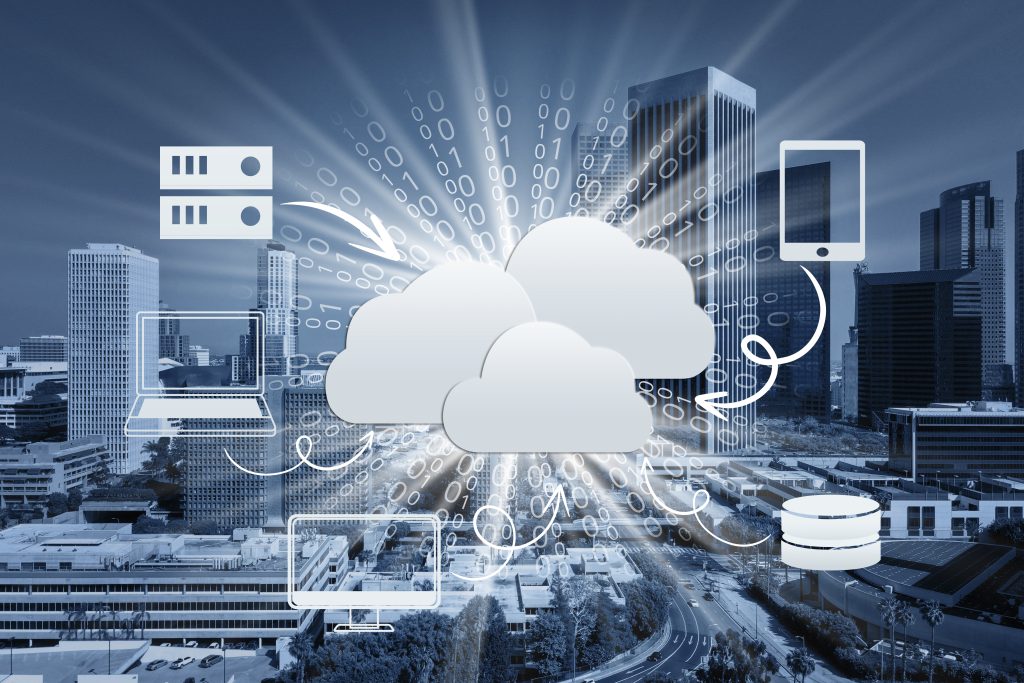
Cloud Data Center (CDC) is one of the major advances in the information technology infrastructure model. Instead of having to invest in building and maintaining physical data centers, businesses can now access infrastructure, storage, and data processing services over the Internet through cloud providers such as AWS, Microsoft Azure, or Google Cloud.
Outstanding benefits:
Elastic Scalability: CDC allows resources to expand or shrink based on actual needs, in minutes, without additional hardware investments.
Optimize operating costs: Businesses only pay for what they use, saving on initial investment and maintenance costs.
Global Accessibility: Users can access data and services from anywhere with an Internet connection, which is great for remote working models.
As more and more businesses move to the cloud, Cloud Data Center is not only a trend but also a strategic infrastructure in every industry.
2. Edge Data Center – Edge Data Center: Solution for Real-Time and IoT

Edge Data Centers are small data centers located close to users or data-generating devices such as IoT sensors, self-driving cars, or industrial manufacturing equipment. Instead of sending all data to large centers for processing, the system will process it right at the “edge” of the network.
Why is Edge important?
Reduced Latency: For applications that require near-instant responses, like autonomous vehicles or remote surgery, transmitting data back to a central location is not feasible. Edge solves this problem by processing data locally.
Bandwidth savings: Instead of sending all data to the cloud, Edge only sends processed information, reducing the load on network infrastructure.
Increased reliability: Edge continues to operate independently even if it loses connection to the primary data center.
Edge Data Center is expected to grow strongly with the wave of 5G, IoT and automation systems.
3. Green Data Center – Green Data Center: Balancing Performance and Sustainability

Data centers are one of the largest consumers of electricity globally, accounting for about 1–2% of the world’s total electricity. Therefore, the Green Data Center trend was born to minimize environmental impact, while maintaining high performance.
Highlights:
Using renewable energy: Many centers now use solar, wind or hydroelectric power to operate.
Optimize cooling system: Implement liquid cooling technology, natural wind or waste heat reuse.
Reuse and recycle: Increase component recycling, reduce electronic waste.
Achieve environmental certifications: Such as LEED (Leadership in Energy and Environmental Design), ISO 50001, Energy Star.
From a business perspective, Green Data Center is not only a commitment to social responsibility but also helps save long-term energy costs and improve brand image.
4. Hybrid Data Center – Hybrid data center model: Flexibility and comprehensive control

Hybrid Data Center is a hybrid model between physical data center (on-premises) and cloud data center. This is a popular choice for organizations with specific needs regarding security, legal or IT system control.
Advantages of hybrid model:
Enhanced Security: Sensitive data such as financial, human resources or strategic information can be stored on-site.
Leverage the power of the cloud: The rest like high-volume processing, AI, or short-term campaigns can be deployed on the cloud.
Minimize the risk of disruption: When one part of the system fails, the rest can still function.
Hybrid Data Center helps businesses be more proactive in balancing performance, security and cost, especially suitable for the financial, healthcare and government industries.
5. Uptime Tier – Data Center Quality Assessment Standard: Measure of Reliability
Uptime Institute (USA) has developed a system to classify data center quality into 4 levels (Tier), to measure the continuous operation and disaster recovery ability of a data center.

Practical significance:
The higher the tier → The greater the reliability → Suitable for services that require 24/7 operation such as banking, telecommunications, e-commerce.
Businesses often choose Tier III or Tier IV when building core infrastructure.
New trends in the data center industry are not just a response to growing technological demands, but also represent the evolution of the industry itself – from a traditional centralized model to a more decentralized, intelligent, and sustainable one. The rise of Cloud, Edge, Green, Hybrid, and standards like Uptime Tier are testament to this profound and multifaceted transformation.
As Vietnam accelerates its digital infrastructure development and becomes a regional data hub, understanding these trends will help businesses, investors and policymakers stay on track – building an efficient, safe and sustainable digital future.