


The global rush by major technology corporations to build data centers serving artificial intelligence (AI) is creating significant ripple effects across the semiconductor market, most notably a growing shortage of memory chips.
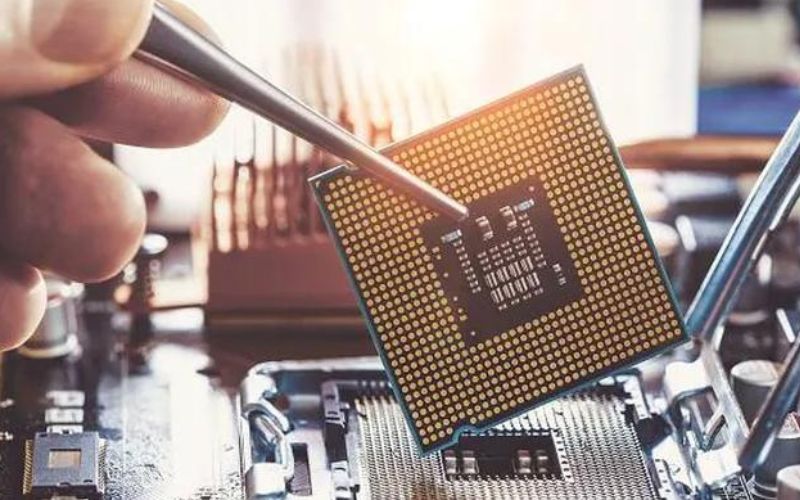
As a result, this trend could push up prices of consumer electronic devices such as smartphones, computers, and household appliances sharply in 2026, with projected increases of up to 20%.
Analysts note that the explosive demand for AI has severely disrupted the balance of the semiconductor supply chain. Memory chips—especially dynamic random-access memory (DRAM)—are becoming a major “bottleneck” as manufacturers prioritize resources for high-end chips used in AI data centers and servers, rather than standard chips for consumer electronics.
Warnings of an impending wave of price hikes have been issued by many major manufacturers. Dell, Lenovo, Raspberry Pi, and Xiaomi have all acknowledged that chip shortages are putting increasing pressure on costs. Analysts forecast that electronic device prices could rise between 5% and 20% next year, depending on the segment and the degree of reliance on memory chips.
Dell Technologies CEO Jeff Clarke stated during the company’s earnings call in November 2025 that Dell had never witnessed “costs rising at such a rapid pace” in many years, adding that these costs would inevitably be passed on to consumers. Raspberry Pi, the UK-based personal computer maker, also described current cost pressures as painful after being forced to raise prices in December 2025. Meanwhile, Lenovo has proactively stockpiled memory chips and critical components to mitigate supply disruption risks.
The root cause lies in the global race to build AI data centers. Increasingly large AI models require massive volumes of high-bandwidth memory (HBM), prompting semiconductor manufacturers to concentrate capacity on this segment. This, in turn, has reduced the supply of standard DRAM, which is widely used in computers, automobiles, and many other electronic devices.
As a consequence, memory chip prices are climbing rapidly. Market research firm TrendForce forecasts that average DRAM prices, including HBM, rose by 50–55% in the fourth quarter of 2025 compared with the previous quarter. Samsung and SK hynix—two giants controlling more than 70% of the global DRAM market—report that orders for 2026 have already exceeded their production capacity. Samsung alone has raised prices on certain memory chip products by as much as 60% recently.
This pressure is gradually being passed on to end consumers. Kim Jae-june of Samsung, cited by Macquarie, projects that electronic device prices could rise by 10–20% in 2026. Meanwhile, Changwon Chung, Co-Head of Asia-Pacific Equity Research at Nomura, believes the increase could be lower, around 5%, if manufacturers succeed in cutting costs elsewhere.
However, according to Greg Roh, an analyst at Hyundai Motor Securities, consumer electronics manufacturers have few alternatives. Cloud computing giants such as Amazon and Google are signing long-term contracts with chipmakers to secure DRAM supplies for AI servers, further shrinking the remaining supply available to the consumer market.
Data from Morgan Stanley shows that investment in AI is accelerating at a staggering pace. Major U.S. technology companies are expected to spend USD 620 billion on AI infrastructure in 2026, up sharply from USD 470 billion in 2025. Total global spending on AI data centers and related hardware could reach USD 2.9 trillion by 2028.
According to Peter Lee, a semiconductor analyst at Citigroup, the chip shortage is likely to persist at least until 2027, when new production capacity comes online. He warns that chip stockpiling will intensify in 2026, further driving up electronic device prices and placing additional pressure on consumers worldwide.
(Source: baomoi.com)