


In the context of the global economy increasingly relying on digital connectivity, telecommunications infrastructure – especially submarine fiber optic cable systems – plays a key role in ensuring international data transmission capacity, improving the stability and speed of the Internet. Vietnam, with the vision of becoming a new digital hub of the Asia-Pacific region, is taking strategic steps to invest in and upgrade its fiber optic infrastructure, aiming to create a foundation for the explosion of digital economy, data centers, artificial intelligence (AI) and cloud computing services in the coming period.
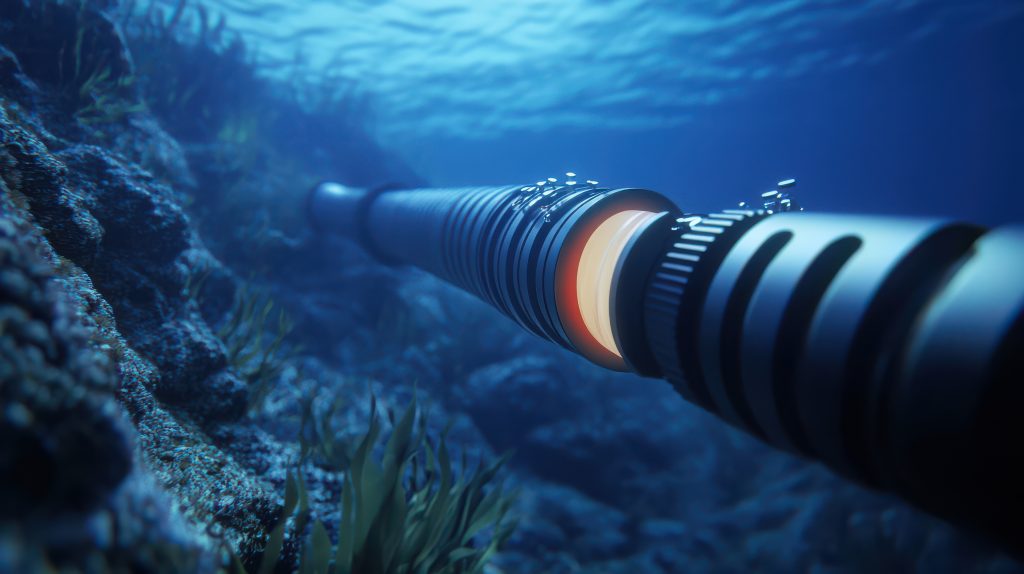
Undersea fiber optic cables – the “backbone” of international Internet
Despite the development of wireless and satellite technology, more than 95% of global Internet traffic is still transmitted via submarine fiber optic cables – “data highways” deep under the ocean, connecting hundreds of countries and territories. For Vietnam – a country with a coastline of more than 3,200 km and a strategic geographical location in Southeast Asia – actively participating in the global submarine fiber optic cable network is not only an urgent need, but also an opportunity to increase its position in the global digital value chain.
Currently, Vietnam is connected to about 6 main international submarine cable lines, including: AAG, APG, IA, AAE-1, SMW-3 and TVH. However, most of these have been operating for over 10 years and often encounter problems, affecting the quality of international connections. Therefore, the expansion of new cable lines with higher capacity and better stability is of particular interest to the Government and domestic telecommunications enterprises.
Strategic goal by 2025: Increase total submarine cable capacity to at least 350 Tbps
According to the national digital infrastructure development plan, by 2025, Vietnam aims to put into operation at least two new international submarine optical cable lines. These will be modern lines, using advanced transmission technology, allowing the transmission of hundreds of Tbps of data per second. At the same time, Vietnam also aims to increase the total design capacity of submarine optical cables to at least 350 Tbps, which is many times higher than the current capacity - when the total capacity is only about 60-70 Tbps.
Some cable lines that are being planned or invested in include: ADC (Asia Direct Cable), SJC2 (Southeast Asia-Japan Cable 2), and especially projects connecting directly to the United States or Europe to reduce latency and increase international connection performance for data centers located in Vietnam.
Accelerating investment to serve data centers and AI
The development of submarine cable infrastructure not only serves the needs of end users, but is also a prerequisite for promoting high-tech industries such as data centers, artificial intelligence (AI), and cloud computing services. These industries require high transmission speeds, low latency, and stable international connectivity – which only large-capacity submarine cable lines can provide.
In the coming time, when Vietnam enters the phase of accelerating the deployment of large-scale data centers such as DCH Digital HUB in Ba Ria - Vung Tau, the need for super-fast international connections will become even more urgent. Upgrading fiber optic infrastructure will not only serve domestic needs but also help Vietnam become a data transit point for the region, attracting global technology companies such as Google, Amazon, Microsoft, NVIDIA or Meta to invest in data centers and cloud services here.
Challenges and solutions
However, developing submarine optical cables is not a simple task. These projects require large capital resources, international coordination, and long construction periods (average 18–24 months). In addition, cable breaks due to maritime activities, fishing, or natural disasters are real challenges. Therefore, Vietnam needs to:
- Enhancing international cooperation in cable investment and operation.
- Proactively develop independent cable lines, owned by domestic enterprises or with a high ownership ratio.
- Diversify backup transmission lines, including land-based fiber optic cables through Laos, China, and Cambodia to supplement when necessary.
- Encourage telecommunications businesses to invest in shared infrastructure, limit fragmented investment that wastes resources.
Fiber optic infrastructure, especially submarine fiber optic cables, is the “circulatory system” of the digital economy. With clear goals and a methodical investment strategy, Vietnam is gradually improving its international connectivity capacity, expanding its “development bandwidth” for the digital future. Achieving a minimum of 350 Tbps by 2025 is not only of technical significance, but also an affirmation of the country’s technological position and readiness to welcome the wave of global digital investment in the coming decade.