


As the world enters the boom period of artificial intelligence (AI), data centers have become essential infrastructure to support the processing, storage and transmission of the huge amount of data generated by AI. Vietnam, with its emerging position as a new technology hub in Southeast Asia, has been investing heavily in this field, laying a solid foundation for the development of the digital economy and the national digital transformation process.
What is AI Data Center and its role in the new technology era

AI Data Centers are not just places to store data, but are also optimized to handle complex tasks such as deep learning, AI model training, and serving applications that require high-performance computing (HPC). These centers need to be equipped with specialized GPUs, modern cooling systems, intelligent orchestration software, and robust electrical infrastructure.
AI Data Centers play an important and essential role in many different fields, helping to optimize processes and bring significant improvements. Specifically:
Digital Government: The AI Data Center supports the processing and analysis of public data, helping government agencies make decisions based on accurate and timely information. AI also helps improve public services, making administrative processes faster, more transparent and efficient, better serving the needs of citizens and businesses.
Medical: AI Data Center helps analyze medical images (such as X-rays, MRIs) and supports early diagnosis of diseases. AI can identify abnormal signs that doctors may miss, thereby giving warnings and suggesting timely treatment methods, helping to improve treatment efficiency and minimize errors.
Finance: In the financial industry, AI helps predict credit risk by analyzing historical data and customers' financial behavior. AI also plays an important role in detecting fraud, identifying unusual or suspicious transactions, protecting the financial system from threats and minimizing losses.
Manufacturing: AI Data Centers help automate and optimize production lines. By analyzing data from sensors, AI can predict and stop operations when there are signs of problems, adjusting production processes to reduce costs and increase productivity, while ensuring product quality.
The General View: Vietnam on the Road to Becoming a Regional AI Data Hub
Vietnam is welcoming a large wave of investment from both domestic and foreign investors in the AI Data Center sector:
NVIDIA signed a cooperation agreement with the Vietnamese Government to establish a research center, AI Data Center, technology transfer and human resource training. This is a sign that Vietnam is recognized as a potential destination in the global AI supply chain.
Viettel is a pioneer in the country, building a chain of Data Centers in Hanoi, Ho Chi Minh City, Can Tho, Binh Duong... It is expected that by 2025, Viettel will reach a total Data Center capacity of up to 350 MW, accounting for about 40% of the national capacity. Viettel also cooperates with NVIDIA to deploy an AI Data Center using more than 6,000 GPU cards, serving super high-end computing needs.
FPT started construction of an Artificial Intelligence Center in Quy Nhon, Binh Dinh, worth 174 million USD. This is not only a place for AI research but also a place to train human resources and test new technologies.
VNPT, CMC, GDT, DCH and many other enterprises are also building or operating Data Centers that meet Tier III standards or higher, combining AI and cloud computing services.
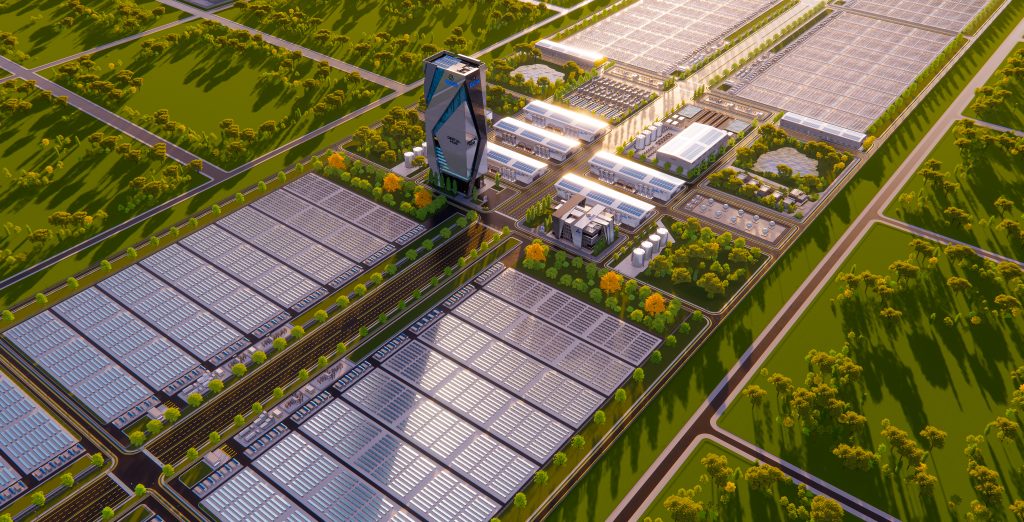
The Vietnamese Government identifies data as one of the most important resources of the new era. Some notable policies include:
The amended Telecommunications Law, effective from 2025, allows foreign investment in Data Centers, opening the market to international investors.
The National Strategy on AI to 2030 aims for Vietnam to be among the top 50 countries in AI, with a strong data infrastructure, innovation ecosystem and high-quality human resources.
The national digital transformation project and the Make in Vietnam program encourage domestic enterprises to develop AI platforms and autonomous data infrastructure.
Vietnam's competitive advantages
According to Cushman & Wakefield, the cost of building a Data Center in Vietnam is among the lowest in the Asia-Pacific region, second only to Taiwan. Vietnam also has a favorable geographical location, located near major technology centers such as Singapore, South Korea and China.
Strong telecommunications infrastructure: Vietnam has a widespread telecommunications infrastructure, high internet coverage, and a widely deployed 5G network – important factors for the effective operation of Data Centers and real-time AI services.
Young and well-trained workforce: Vietnam has a young, dynamic workforce, with many AI training programs at major universities such as Hanoi University of Science and Technology, FPT, Ho Chi Minh City National University, Danang University... In addition, businesses such as VinAI, Viettel AI, FPT AI also play the role of training centers.
Challenges remain
Huge Power Demand: AI Data Centers consume many times more power than traditional Data Centers. Without renewable energy solutions (such as solar, wind), the national power grid can be overloaded.
Lack of high-quality human resources: Although young human resources are abundant, the source of experts in microchip design, distributed system architecture, and AI infrastructure management is still quite scarce.
Cyber and Data Security: The storage and processing of big data requires strong security capabilities. AI Data Centers need to invest heavily in monitoring systems, access control, encryption, and strict compliance with international standards for the protection of personal data.
What future for Vietnam?
With the current growth rate, experts predict that the Data Center market in Vietnam could reach a scale of over 1 billion USD by 2028. If it maintains its growth momentum and continues to invest in three main pillars: infrastructure - technology - human resources, Vietnam can completely become the AI data transit center of the ASEAN region.
Not only serving domestic needs, Vietnam also has the potential to become a strategic partner in the global AI value chain, contributing to bringing "Make in Vietnam" products to the world.
The development of the AI Data Center in Vietnam is a sign of the country's strong vision and determination in accessing and mastering core technologies of the digital era. This is not only an economic issue, but also a strategic step in the journey to elevate Vietnam's technological position and digital sovereignty.