


The rapid growth of e-commerce is directly reshaping demand for industrial real estate, particularly in the warehousing and logistics segment. According to Savills, Vietnam’s e-commerce market is projected to reach USD 26–28 billion in 2025. In the first nine months of 2025 alone, the four leading platforms—Shopee, TikTok Shop, Lazada, and Tiki—recorded a combined gross merchandise value (GMV) of USD 11.62 billion, representing a 34.4% year-on-year increase.

The report also notes that more than 7,000 new sellers entered the market in the first half of 2025, highlighting intensifying competition. In this context, platforms are shifting their focus from aggressive market share expansion to operational efficiency, where warehousing and order fulfillment systems play a critical role.
This trend is driving demand for modern logistics models such as fulfillment centers, technology-integrated warehouses, and fast-delivery systems. In particular, industrial parks located near Ho Chi Minh City, Hanoi, and major industrial corridors are benefiting significantly as enterprises prioritize shorter delivery times and optimized last-mile costs.
The semiconductor industry is entering a phase of expansion both in scale and depth across the value chain. Vietnam’s National Semiconductor Strategy, approved in late 2024, aims to position the country as a more important link in the global supply chain—starting from assembly and testing, and gradually moving toward advanced packaging, chip design, and selected manufacturing segments.
Between 2023 and 2025, Vietnam recorded USD 11.6 billion in new investment in semiconductors and high-value electronics. The semiconductor assembly and testing segment alone attracted approximately USD 3 billion in registered capital, with participation from several major global investors.
In parallel, the Government has allocated USD 1.05 billion for semiconductor industry development during the 2024–2030 period, along with USD 670 million for workforce training. A key milestone is expected in 2026, when Vietnam’s first chip fabrication plant is scheduled to commence operations.
This expansion is generating new demand for industrial real estate—not only standard factory space, but also large land banks, stable technical infrastructure, reliable power supply, and dedicated areas for research and development. As a result, specialized industrial clusters are emerging, gradually replacing the traditional industrial park model.
Alongside semiconductors, the electric vehicle (EV) industry is emerging as another important driver of industrial real estate demand. According to the report, Vietnam’s EV market reached approximately USD 3.2 billion in 2025, supported by government policies, domestic market growth, and shifting consumer behavior.
Notably, in the first half of 2025, battery electric vehicles accounted for 42% of total new vehicle sales—one of the highest ratios globally. This trend is creating strong pull effects across domestic manufacturing supply chains, particularly in components, batteries, and electronics.
The development of the EV industry is not only generating demand for assembly plants, but also driving demand for industrial parks capable of integrating entire supply chains—from component manufacturing to logistics and technical services. Industrial parks located near production hubs, seaports, and major industrial corridors are clearly benefiting.
Savills’ report also highlights Vietnam’s accelerated development of digital infrastructure to meet rising demand from artificial intelligence, cloud computing, and data-driven services. This is creating a new layer of demand for industrial real estate, especially in areas with advantages in technical infrastructure and connectivity.
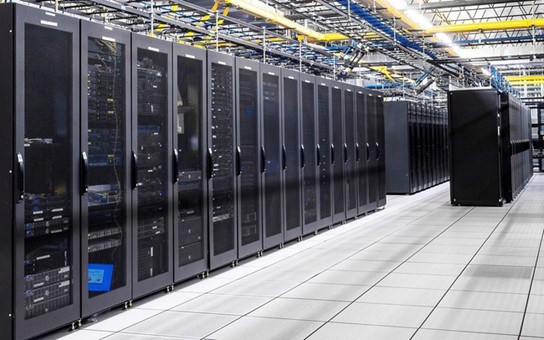
As of 2025, Vietnam has 41 operational data centers with a total capacity of approximately 524.7 MW, marking a sharp increase compared to previous years. This capacity is forecast to approach 950 MW by 2030. The Asia Direct Cable (ADC) submarine fiber-optic cable, which became operational in 2025, has also significantly enhanced Vietnam’s international connectivity capacity.
Data centers impose fundamentally different requirements compared to traditional factories, ranging from stable power supply and specialized technical infrastructure to long-term scalability. As a result, this segment is concentrated in only a limited number of industrial parks capable of meeting such stringent requirements, thereby intensifying market segmentation.
The report further concludes that the market will continue to differentiate by industry and by the capability of industrial parks. Projects that can effectively meet the specific needs of e-commerce, data centers, and high-tech manufacturing will hold a clear advantage in attracting tenants.
Against the backdrop of major infrastructure projects scheduled for completion from 2026 onward, combined with the growth of semiconductors, data centers, electric vehicles, and sustainability requirements, Vietnam is entering a new growth cycle—one in which scale goes hand in hand with quality.
(Source: nhandan.vn)