


THERMAL STORAGE SYSTEM – CENTRAL COOLING FACTORY
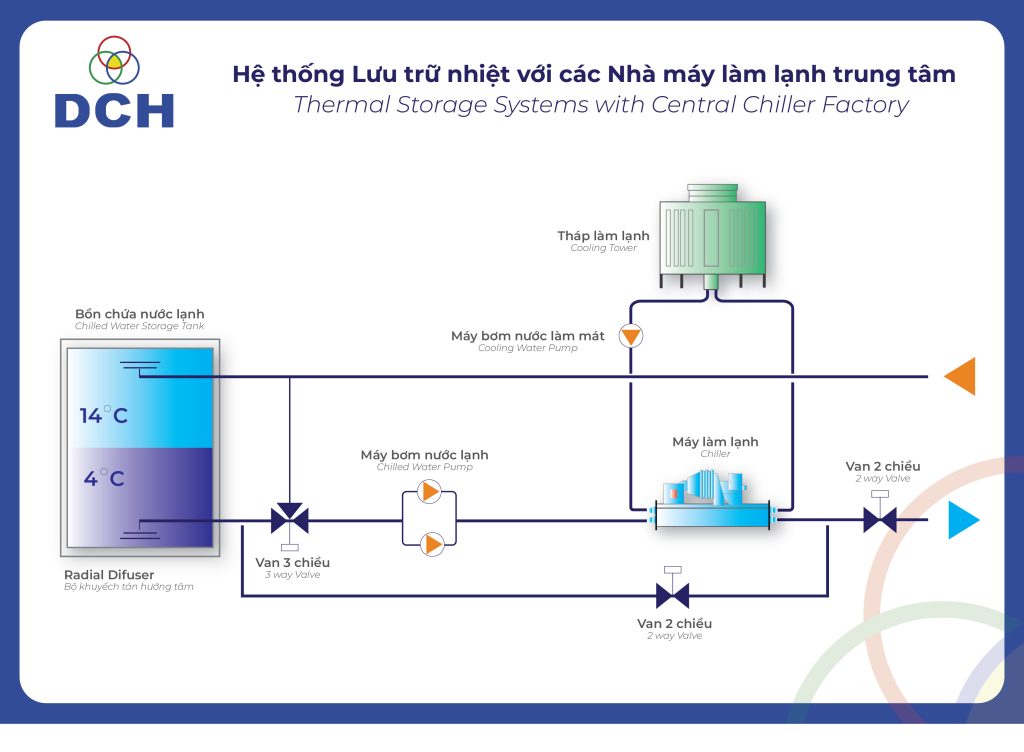
A thermal storage system typically consists of tanks of chilled water or ice that store the cooling energy produced by central refrigeration plants during periods of low energy demand. The stored cooling energy is then used during periods of peak demand or when the main cooling system is down. This approach not only balances the energy load but also improves the reliability of the cooling system.
BENEFITS OF THE SYSTEM
Increase energy efficiency
Power transmission: The system allows chillers to operate during off-peak hours when electricity prices are lower. This process involves producing chilled water or ice, which is stored and used during peak hours. For example, at night, when energy demand is low, chillers can operate at maximum efficiency to produce and store chilled water.
Peak Shaving: By using stored cooling energy during peak hours, the system reduces demand on the grid, resulting in significant cost savings. This is especially beneficial for large Data Centers where energy costs can be very high.
Increased reliability and redundancy
Backup cooling: In the event of a chiller failure or maintenance, the thermal storage system will provide an immediate alternative cooling source, ensuring continuous operation of the Data Center. For example, if a chiller fails during peak operating hours, the stored chilled water can maintain the cooling load until the chiller is repaired.
Power failure response: The system can provide cooling power during power outages, which is critical to preventing IT equipment from overheating. This is especially important for a Hyperscale Data Center, where any downtime can result in significant financial and operational losses.
Save operating costs
Save operating costs By shifting energy consumption to off-peak hours, the system reduces overall energy costs. For example, a data center can take advantage of lower nighttime electricity prices to produce and store chilled water, which is then used during peak daytime hours.
Deferred capital expenditure: The system can delay the need for additional chiller capacity, optimizing capital expenditure over time. As the Data Center expands, additional cooling capacity can be added gradually through the thermal storage system without requiring large-scale investment up front.
Sustainable environment
Energy optimization: The system maximizes energy usage, aligns with sustainability goals, and reduces the Data Center’s carbon footprint. By operating chillers at optimal efficiency and storing excess cooling energy, the system reduces waste and increases overall energy usage.
Emission reduction: Reducing the need for supplemental cooling during peak demand periods will reduce greenhouse gas emissions associated with electricity generation. For example, by reducing reliance on grid power during peak demand periods, Data Centers can reduce their environmental impact.
Optimized chiller operation: Operating chillers during off-peak hours allows them to operate at their most efficient levels, reducing wear and tear and extending their life. This also reduces maintenance requirements and costs.
Temperature control: Stable and reliable cooling ensures that IT equipment operates within optimal temperature ranges, improving performance and longevity. Thermal storage systems provide a stable cooling environment, reducing the risk of overheating and hardware failure.
DCH DIGITAL HUB DATA CENTER THERMAL STORAGE SYSTEM – COLD WATER TANK
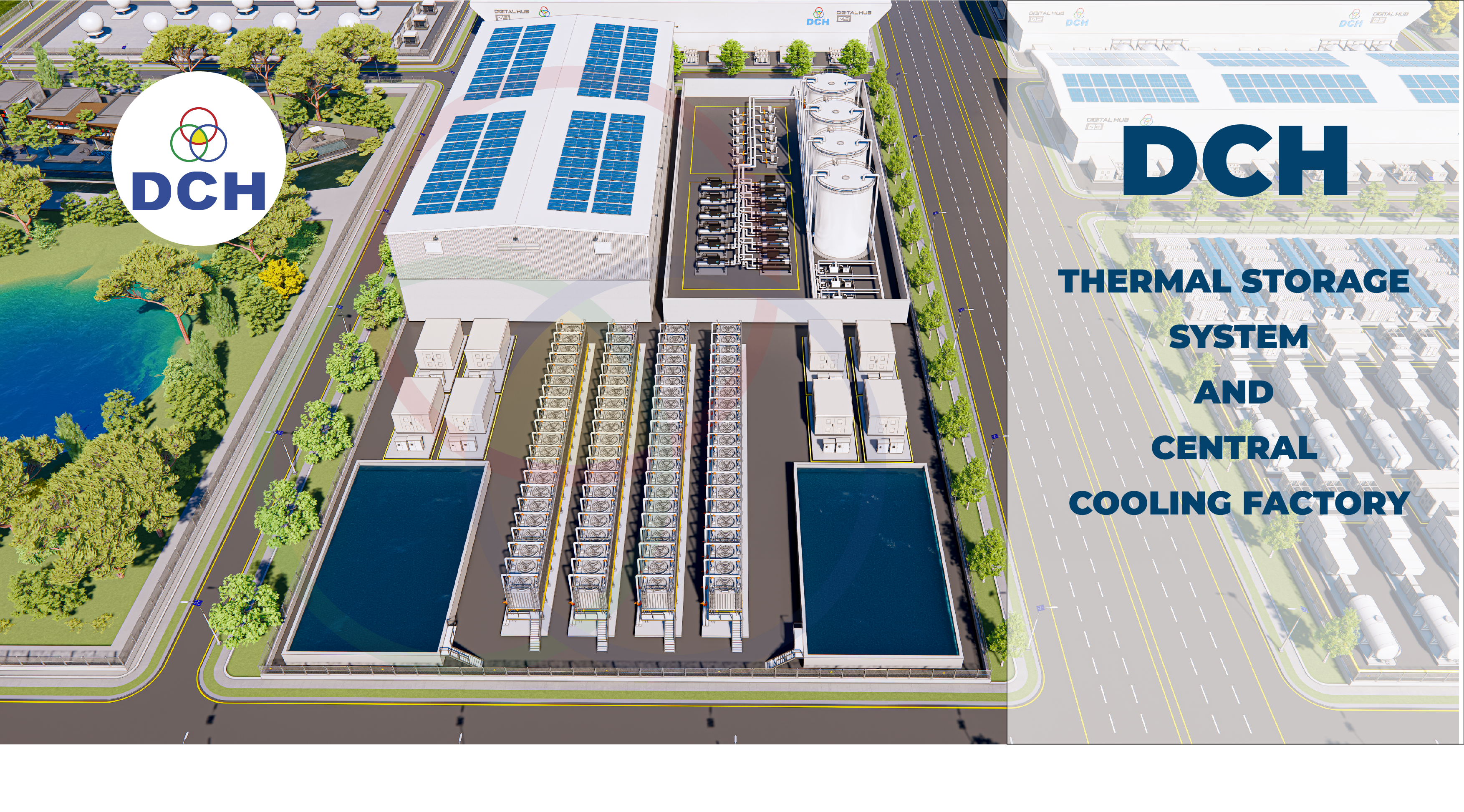
Size and capacity: The Digital Hub Data Center, with a total IT load capacity of 75MW, will benefit significantly from the scalability of the thermal storage system. Each Data Center hall is designed with a dedicated thermal storage system – a cold water tank, ensuring that cooling needs are met efficiently. For example, each Data Center hall has 1,200 racks with a total IT load capacity of 15MW, requiring powerful and reliable cooling solutions.
Centralized cooling factory: The central chiller plant in this project consists of 12 medium voltage chillers in a 10+2 (N+1) redundant configuration, providing a total cooling capacity of 84.4 MW plus 16.8 MW of standby. The ice storage system, powered by three dedicated chillers, can store and provide cooling energy for at least 12 hours at full load, ensuring uninterrupted service during peak load periods or chiller maintenance.
Energy saving: By using thermal storage, the Data Center can take advantage of lower energy levels during off-peak hours, reducing overall energy costs. For example, at night, the chiller can produce and store chilled water for use during peak daytime hours, resulting in significant cost savings.
In summary, integrating thermal storage with the central chiller plants in this Data Center project will improve energy efficiency, reliability, cost savings and environmental sustainability. It ensures the facility can meet cooling needs efficiently while supporting operational and sustainability goals, making it a robust and future-proof solution for large-scale Data Centers.