


Undersea fiber optic cables are one of the most important and sophisticated infrastructures of the modern world. Although only the diameter of a normal irrigation pipe, they are the “data lifeline” that helps transmit more than 95% of global Internet traffic every day, connecting continents at the speed of light. In order to survive and operate stably for decades at the bottom of the ocean – where there is extreme pressure, high humidity, low temperature and many physical risks – the structure of undersea fiber optic cables is designed with many extremely precise and sturdy protective layers.
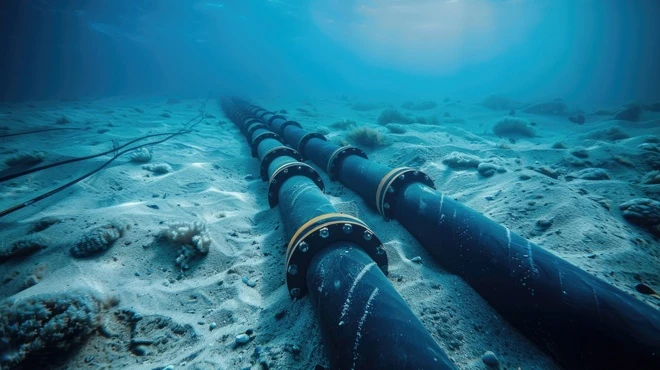
At the center is the fiber optic core – a strand of ultra-pure glass, smaller than a human hair, through which the light signal carrying the data is transmitted. Surrounding it is a gel or buffer layer to absorb shock and prevent moisture from entering. Next is the conductive layer made of copper or aluminum, which is responsible for supplying power to signal amplifiers placed along the cable route. Outside the conductive layer are insulating layers, usually made of synthetic resin, which help protect the cable from electromagnetic interference and keep it safe in the seawater environment. Most importantly, the steel reinforcement layer – consisting of many twisted steel wires – helps the cable withstand great pulling forces during deployment, while also resisting impacts from rocks, ships or marine life. Finally, the outer protective layer is made of polyethylene, which helps prevent corrosion and isolates the cable from environmental impacts. In areas near the coast, where the risk of collision is high, the cable is also covered with a double steel armor to protect against incidents caused by anchors, fishing nets or marine equipment.
The construction of a submarine cable is a large-scale project, lasting 18 to 24 months, requiring multinational coordination and modern technology. First, experts must survey the seabed using sonar technology and remote-controlled robots to determine the terrain, depth, seabed composition and seismic factors that may affect the cable's path. From this data, the cable will be designed to optimize its length, avoid risks and facilitate deployment. The cable is then manufactured according to international standards and rolled into large sections, loaded onto specialized ships to lay the cable.
During construction, the ship will drop the cable to the seabed along a predetermined route. In areas close to shore, underwater robots will dig trenches and bury the cable 1 to 3 meters deep to protect it from maritime activity. Every 60 to 100 kilometers, a signal amplifier will be integrated into the cable to ensure that the transmitted signal is not degraded. These amplifiers operate continuously and are powered by the power source included in the cable. Once on shore, the cable is towed to land and connected to a receiving station called a submarine cable station – where the data is distributed to the country's domestic network.
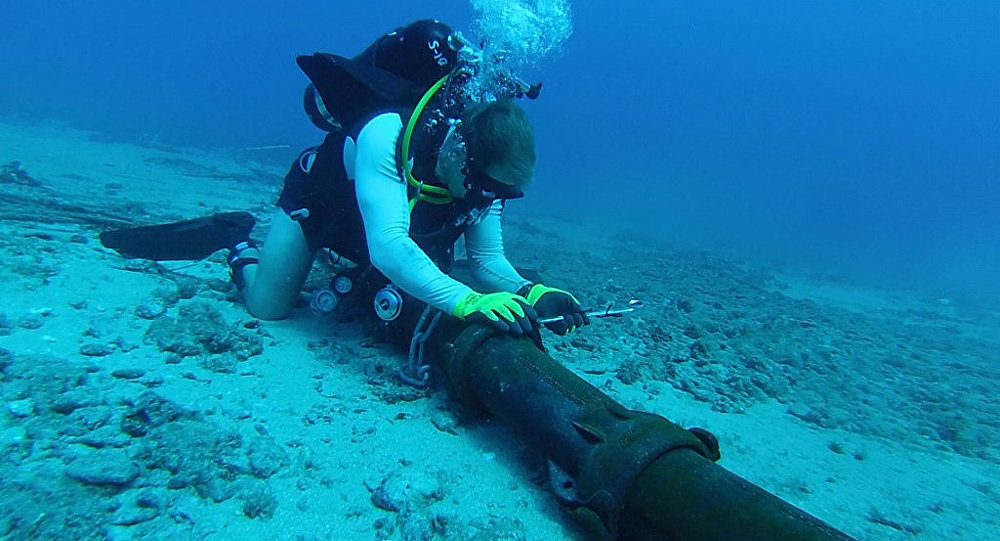
In Vietnam, one of the new strategic submarine cable stations being invested in is the DCH landing station in Ba Ria – Vung Tau. This is not only a data receiving station, but also a starting point for important submarine cable lines that will connect Vietnam directly to regional and global data centers. Specifically, from this fiber optic cable station, DCH is implementing a plan to connect international submarine cable lines to Malaysia, Singapore and Japan - major data transit points in Asia. This direct connection will help shorten latency, increase transmission speed, reduce dependence on intermediate routes, and improve international network stability to serve AI data centers, cloud services and digital infrastructure that DCH is developing.
A submarine cable can be several hundred to more than 20,000 km long, connecting many countries, islands or continents. The cost of each line can range from several hundred million to more than a billion US dollars, depending on the length, depth and geological structure. Notably, although the cables are located deep under the ocean floor, more than 70% of incidents occur in shallow waters, close to shore, where there is a lot of shipping, anchoring and fishing. Therefore, the maintenance, monitoring and construction of backup networks for submarine cables are also an important part of operating global telecommunications infrastructure.
Submarine optical cables are not a single technological product but a combination of optical, mechanical, maritime and geopolitical strategies. For countries like Vietnam, especially in the vision of leading enterprises like DCH, mastering the landing point and international connection route is a decisive step in the journey to become the leading data center and digital connection center in the region.