


The rapid development of artificial intelligence (AI) is causing many people to worry about the future of jobs. The greatest fear is that AI will replace humans, rendering many existing occupations obsolete. In reality, this concern is not entirely unfounded: AI will certainly reshape the labor market, forcing many jobs to change—or even disappear.
However, on the other hand, this technology is also opening up entirely new opportunities—professions that would have been hard to imagine just a few years ago.
History shows that every technological revolution brings disruption, but also creates new roles to meet emerging societal needs. AI is no exception. As AI becomes increasingly embedded in daily life—from finance and healthcare to transportation, education, and human resources—people will be needed to interpret, manage, supervise, and harness AI effectively. According to an article in The Wall Street Journal, below are four professions that are expected to emerge and grow strongly in the AI era.
AI “EXPLAINERS”: A BRIDGE BETWEEN TECHNOLOGY AND SOCIETY
One of the biggest challenges of AI today is its “black box” nature. Many AI systems produce results that even their developers struggle to fully explain. In some cases, AI can generate inaccurate or fabricated information that appears highly convincing.
As AI is increasingly entrusted with sensitive tasks—such as loan approvals, medical treatment recommendations, or candidate screening in recruitment—the question arises: Who is responsible for explaining how AI systems work? Who ensures they are properly updated, operated according to standards, and do not pose legal risks?
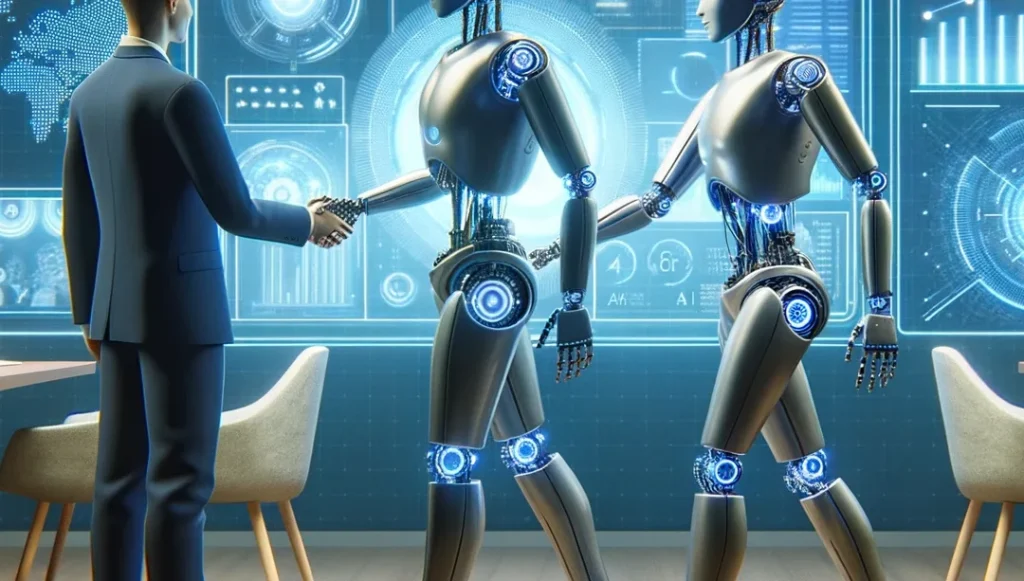
This is where the role of the “AI explainer” comes in. These professionals have deep knowledge of AI technologies and the ability to translate complex technical concepts into language that is understandable to executives, judges, regulators, and the general public.
Imagine a lawsuit involving a traffic accident between an autonomous city bus and a privately owned self-driving car. The court would need to understand whether the software of both vehicles was updated in compliance with regulations, and whether responsibility lies with the owner, the vehicle manufacturer, or the software provider. In such cases, each party may hire an AI explainer to provide expert testimony, analyze how the AI systems made decisions—and naturally, each side would interpret those decisions in its own favor.
AI CHOOSERS: SOLVING THE QUESTION OF “USING THE RIGHT TECHNOLOGY FOR THE RIGHT TASK”
Not all AI is the same. In reality, the AI landscape includes a wide range of technologies, from predictive AI and data analytics AI to generative AI. For businesses—especially those new to the technology—choosing the wrong type of AI can lead to significant waste of time, money, and resources.
An “AI chooser” acts as a strategic advisor, helping organizations understand which AI technologies best align with specific objectives. Beyond consultation, they also support companies throughout the process of procurement, deployment, and integration of AI into operational systems.
For example, a retail chain seeking to boost sales might be advised to use predictive AI to analyze purchase histories, forecast demand, and personalize product recommendations. By contrast, if the goal is to support marketing teams in creating advertising content, generative AI would be a more suitable choice. Matching the right technology to the right need will become a critical competitive advantage in the digital era.
AI AUDITORS AND “AI CLEANERS”: SAFEGUARDING FAIRNESS AND ETHICS
Bias in AI is a growing concern for businesses and regulators alike. AI systems learn from historical data, and if that data contains biases, the outputs will reflect them—sometimes in subtle and hard-to-detect ways.
To address this issue, two new roles may emerge in parallel: AI auditors and “AI cleaners.” AI auditors conduct regular reviews—weekly, monthly, or even daily—to assess whether AI systems produce biased or discriminatory outcomes. This work is especially critical in fields such as recruitment, credit, insurance, and the justice system.
Once issues are identified, AI cleaners intervene to adjust the system, for example by modifying training datasets, adding more diverse data, or fine-tuning algorithms to reduce bias. This is not merely a technical challenge but one that directly affects ethics, social responsibility, and corporate reputation.
AI TRAINERS FOR HUMANS: EDUCATION IN A NEW ERA
As AI becomes deeply embedded in everyday work, employees will need to learn how to collaborate with technology. Demand for reskilling and upskilling will therefore rise sharply, especially among mid-career workers and staff in small businesses that lack resources for large-scale training programs.
AI trainers for humans represent a new category of education professionals. Instead of delivering one-size-fits-all courses, they will leverage AI itself to personalize learning. Technology will analyze individuals’ strengths, weaknesses, learning speed, and learning styles, then design tailored training pathways.
This approach enables workers to acquire new skills quickly without returning to formal education systems, while allowing companies to upgrade workforce capabilities in a more flexible and efficient manner.
According to The Wall Street Journal, these four professions are only early examples. In reality, AI may give rise to many new roles in fields that we cannot yet name. The future will undoubtedly bring uncertainty and challenges—but also unprecedented opportunities.
(Source: econmomy.vn)